
Details Matter More Than People Realize
Details are what make a home feel thoughtful.
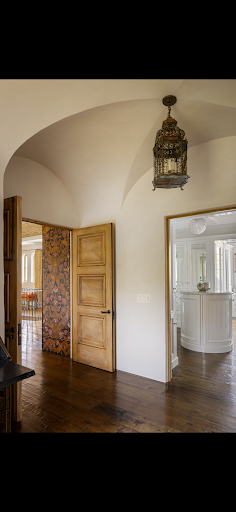
People often recognize when a space feels beautiful, balanced, calm, or complete, even if they cannot immediately explain why. More often than not, it is not a single defining feature, but rather the accumulation of small, deliberate decisions working together in harmony.
The ceiling line.
The reveal between materials.
The way the tile is laid out.
The placement of a sconce.
The thickness of a countertop.
The way cabinetry aligns with the architecture.
The way lighting softly highlights a detail instead of flattening the room.
These are the things people may not consciously notice, but they absolutely feel.
At Welch Design Studio and Welch Design Studio Interiors, we believe it is these details that distinguish a space that simply looks nice from one that is truly designed.
Details Create the Feeling of Quality
A room can be filled with beautiful furniture and high-end finishes, yet still feel unresolved if the details are not carefully considered.
People may not be able to identify what feels off. They are unlikely to point out that a reveal is wrong, or a light that is misplaced, but they will still be able to sense when a space does not feel entirely right.
Resolved details create calm, clarity, and a sense of order. They allow a space to feel intentional.
When stone aligns properly, cabinetry feels integrated into the architecture, ceiling details are resolved, and lighting is placed with precision, the entire room reads as more refined and cohesive.
These details may be subtle, but they carry the overall quality of the space.
Every Line Matters
In design, every line matters.
The line of a ceiling. The line of a cabinet. The line where stone meets wood. The line of a baseboard. The line of a stair. The line of light across a wall.
When these lines are considered in isolation, a space can feel fragmented or visually busy. When they are considered together, the room begins to feel composed, balanced, and resolved.
This coordination is essential because nothing in a space exists independently. A ceiling detail influences the lighting. Lighting influences the furniture. Furniture affects circulation. Circulation affects how people experience the room.
Everything is connected.
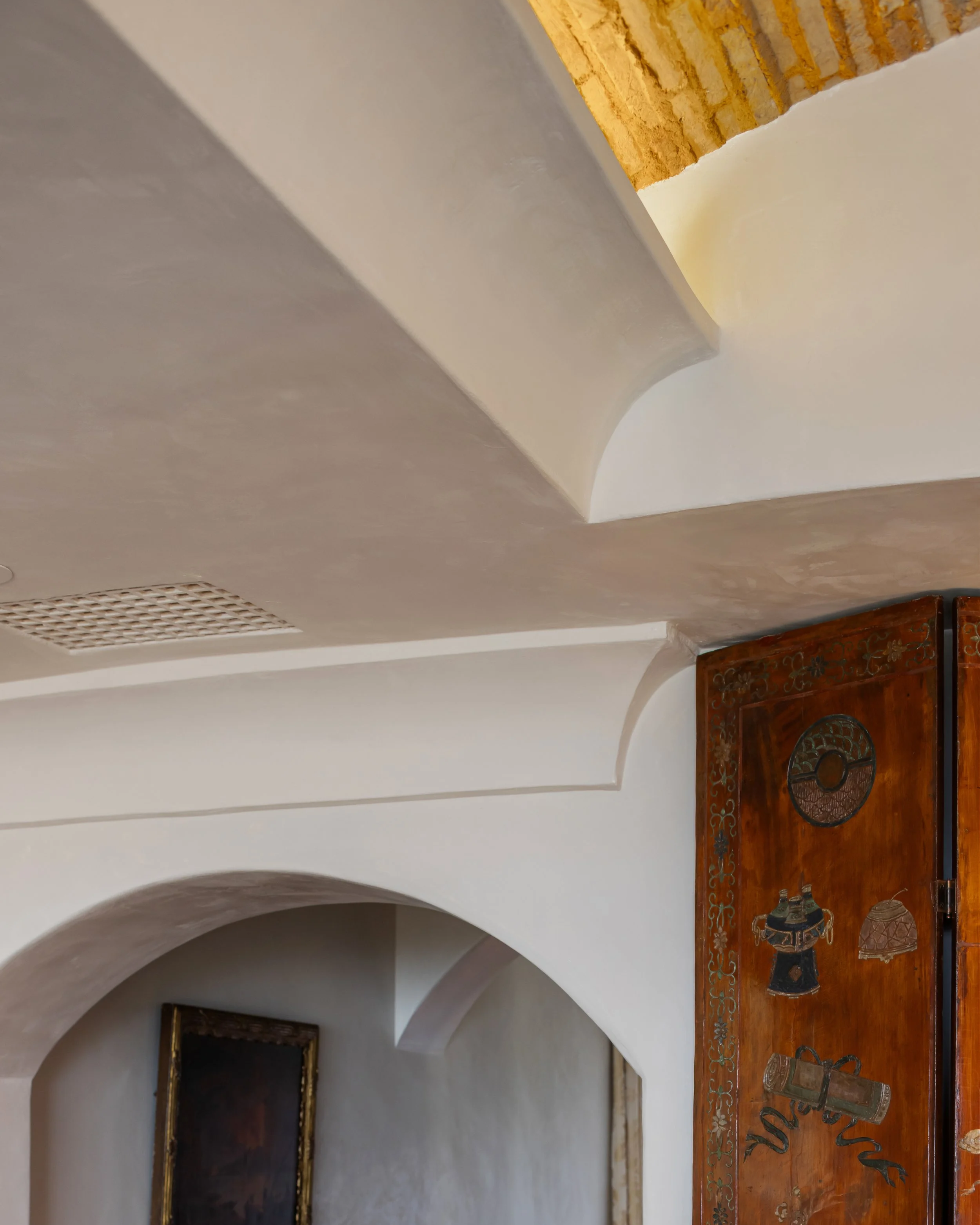
Ceiling Details Change the Room
Ceilings are often overlooked, yet they have a significant impact on how a space feels.
A well-considered ceiling can make a room feel taller, softer, more intimate, more dramatic, or more architectural. It can define a space without the need for walls and bring rhythm and proportion to an otherwise open plan.
Cove lighting, beams, coffers, plaster details, shadow lines, and transitions all influence the atmosphere of a space.
When ceiling details are designed well, they feel inherent to the architecture. When they are not, they can feel applied or unresolved. Their best details always feel as though they were a part of the original intent.
Cabinetry Should Feel Built In, Not Placed In
Cabinetry is one of the most important areas where details become visible.
The width of a stile, spacing between doors, alignment of panels, proportion of drawers, placement of hardware, floor and ceiling reveals, and the way cabinetry meets adjacent walls all contribute to the final result.
Custom-designed cabinetry should never feel like boxes placed into a room. Instead, it should feel fully integrated into the architecture itself.
This integration is what elevates kitchen, bathrooms, libraries, dressing rooms, and bars, allowing cabinetry to feel like part of the architecture rather than furniture within it.
Lighting Placement Is Everything

Lighting can define or diminish a space.
It is not simply about providing enough light, but about placing light intentionally at the right height, in the right locations, with the right temperature, and for the right purpose.
Recessed lighting should be thoughtfully aligned with furniture and architectural elements rather than placed arbitrarily. Sconces should relate to mirrors, artwork, or cabinetry. Pendants should feel proportionate to the space and the surfaces they illuminate.
When lighting is carefully planned, it enhances architecture, supports interiors, and adds mood, warmth, depth, and clarity. It makes a space feel both layered and alive.
Tile Layout Is Not a Small Thing
Tile is another area where precision significantly matters more than people realize.
It is not only about selecting a beautiful material, but about how it is laid out: where the tile begins and ends, how it wraps corners, how it aligns with niches, windows, drains, cabinetry, and surrounding walls.
A poorly planned tile layout can make even the most expensive tile feel ordinary. Conversely, a thoughtfully planned layout can make a simple tile look beautiful.
Grout spacing, cuts, edges, and transitions all play a role in how resolved the final surface feels.
The goal is always for the material to feel intentional, continuous, and carefully composed.
Hardware and Finishes Complete the Story
Hardware may seem small, but it has a meaningful impact on the character of a space.
Door hardware, cabinet pulls, hinges, faucets, trim details, metal finishes, and tactile accessories all contribute to the overall design language of the home.
These hardware elements should never feel like afterthoughts. Instead, they should reinforce the architecture and interiors with consistency and purpose.
When thoughtfully selected, hardware can feel like jewelry within a space: refined, subtle, and purposeful, while still being fully functional and appropriately scaled.
Even the smallest details contribute to the sense of completeness in a design.
Good Details Make a Space Feel Effortless
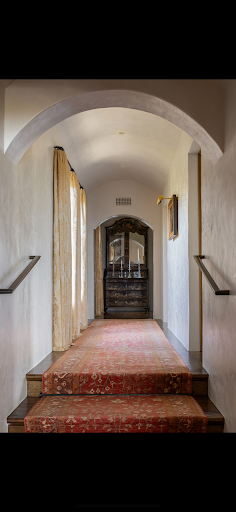
The irony is that the best detailing is often the least noticeable.
It does not draw attention to itself; instead, it quietly supports the space. It simply makes everything feel right.
That is what makes detailing so essential.
When details are resolved, a space feels effortless and composed. When they are not, even the most expensive materials can feel unresolved or incomplete, even if the materials are expensive.
Good design is not just about strong ideas, it is about carrying those ideas through every detail.
Why Details Matter
Details matter because they shape the entire experience of a home.
They influence the architecture, interiors, lighting, materials, craftsmanship, and the daily experience of living in the space.
They are what make a home feel thoughtful.
They are what make a room feel balanced.
They are what make a space feel finished.
They are what make the design last.
Details may be quiet, but they are never insignificant.