
7 Design Investments Worth Every Penny
There's a moment almost every homeowner reaches: standing in a half-finished space, budget spreadsheet open, trying to decide where the money actually needs to go. Some choices are obvious splurges. Others quietly determine whether a home feels expensive or merely expensive-to-maintain. The difference usually comes down to knowing which design investments compound in value over time, and which ones just look good in a listing photo.
This isn't a list of luxury upgrades for their own sake. It's a look at the specific design decisions that consistently pay off, whether that payoff shows up in resale value, daily comfort, or how a builder or interior designer talks about a home years after it's finished.
The Difference Between Spending and Investing
Every dollar spent on a home falls into one of two categories: things you notice for the first six months and things you notice for the next thirty years. A statement light fixture is the first kind. Solid-core doors, properly sized HVAC, and good millwork are the second kind. Neither is wrong, but they're not interchangeable, and confusing one for the other is how renovation budgets quietly go sideways.
The investments below were chosen because they sit almost entirely in that second category. They tend to be less Instagrammable and more structural the kind of thing a contractor points out to a buyer's inspector five years from now, right before the buyer decides to pay the asking price without negotiating.
Quality Windows Over Quantity of Windows
A wall of oversized, poorly insulated windows looks dramatic on day one and becomes a heating bill on day one hundred. Fewer, better-placed windows with strong thermal performance almost always outperform more windows of lower quality, both financially and in terms of comfort. Good glazing also ages better - cheap windows fog, warp, and stop sealing properly within a decade, while premium units are often still performing at spec twenty years later.
Where the value shows up: lower utility bills, fewer drafts near seating areas, and a detail that inspectors and appraisers both notice.
Real Millwork and Trim Detailing
Baseboards, crown molding, window casings, and door trim are easy to skip when budgets tighten, largely because their absence isn't obvious until you're standing in a room that feels unfinished without quite knowing why. Millwork is what makes a ceiling look intentional rather than incidental. It's also one of the cheaper line items relative to the perceived value it adds - a modest trim upgrade often costs far less than people assume, especially compared to finishes like flooring or countertops.
A Kitchen Layout Built Around Real Cooking Habits
Countertop material gets all the attention, but layout is what determines whether a kitchen actually works. The classic work triangle between stove, sink, and refrigerator still holds up because it's based on how people physically move while cooking, not on trend cycles. Spending design time here even without spending extra money pays off every single day the home is lived in, which is more than can be said for most finish upgrades.
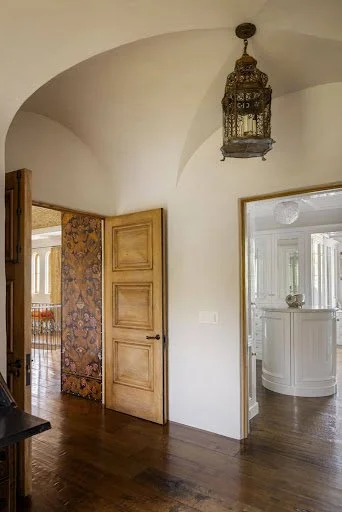
Solid-Core Interior Doors
Hollow-core doors are one of the most common places builders cut costs and one of the first things people notice once they've lived with better ones. Solid doors sound different when they close, feel different when they open, and block sound between rooms in a way hollow doors simply can't. The upgrade cost is usually modest per door, but the cumulative effect across a whole home changes how the entire space feels.
Durable, Timeless Flooring
Flooring covers more square footage than almost any other material choice, which means both its cost and its visual impact scale accordingly. Trend-driven flooring, a specific wide plank finish, an unusual tile pattern, a color that peaked in popularity three years ago tends to date a home faster than almost any other decision. Classic, durable materials chosen for longevity rather than novelty consistently hold their value better and require less frequent replacement.
Properly Sized and Zoned HVAC
An oversized or undersized HVAC system is invisible until the first extreme season, at which point it becomes the only thing anyone in the house is talking about. A correctly sized, properly zoned system costs more upfront than a generic one, but it eliminates the hot upstairs bedrooms and cold basement offices that plague so many homes with mismatched mechanical systems. It's a design investment in the truest sense: nobody sees it, but everybody feels it.
Thoughtful Outdoor Lighting
Outdoor lighting is frequently treated as decorative when it's actually functional, safety-related, and one of the highest-return investments in curb appeal. Well-placed path lighting, uplighting on architectural features, and adequate entry lighting change how a home is perceived after dark far more than daytime landscaping ever will. It's also relatively inexpensive to install well compared to hardscaping or major landscaping projects, making it one of the better dollar-for-dollar returns on this entire list.
Quick Reference: Where the Value Actually Shows Up
Investment
Where You Feel It
Where You See the Return
Quality windows
Comfort, lower bills
Resale, appraisal
Millwork & trim
Everyday visual polish
Perceived home value
Kitchen layout
Daily cooking experience
Buyer walkthroughs
Solid-core doors
Sound, feel, privacy
Long-term satisfaction
Durable flooring
Daily wear resistance
Avoided replacement cost
Zoned HVAC
Year-round comfort
Reduced energy costs
Outdoor lighting
Nighttime safety and ambiance
Curb appeal, resale
The Bottom Line
None of these seven design investments are flashy, and that's precisely the point. They're the choices that hold up under actual daily use, that a home inspector nods at approvingly, and that don't need to be redone in five years because a trend moved on without them. When budgets are tight, it's worth remembering that the most photogenic choice and the most valuable choice are rarely the same one and the homes that age the best are usually the ones where someone chose correctly between the two.
Our recent blog